
 English grammar
Third conditional: if + had, would have 📕
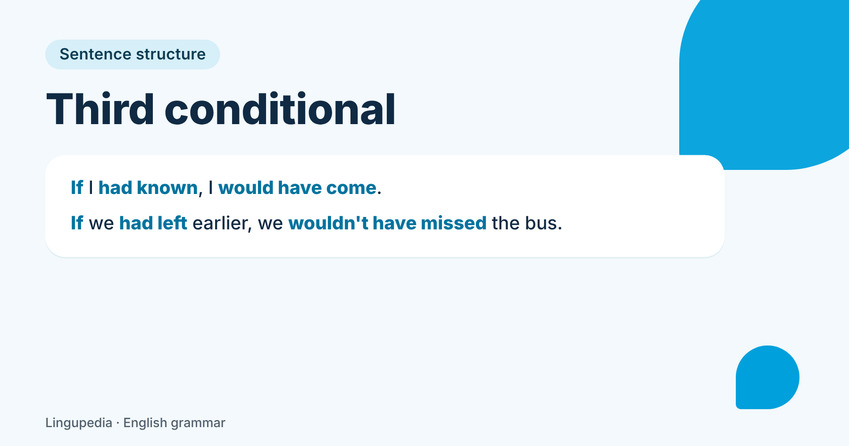
We use the third conditional to imagine a different past. We talk about things that did not happen.
Form
| If + had + past participle | would have + past participle |
| If I had known, | I would have come. |
| If we had left earlier, | we wouldn't have missed the bus. |
| If she had studied, | she would have passed. |
Meaning
If I had known about the party, I would have come.
The real situation: I didn't know about the party, so I didn't come.
Short forms in speech
If I'd known, I'd have come.
Here, the first 'd = had, and the second 'd = would.
✗ If I would have known, I would have come.
✓ If I had known, I would have come.
💡 The third conditional is often used to talk about regrets: If I had listened to you, this wouldn't have happened.