
 English grammar
Spelling rules for -s, -ed, -ing, -er and -est 📕
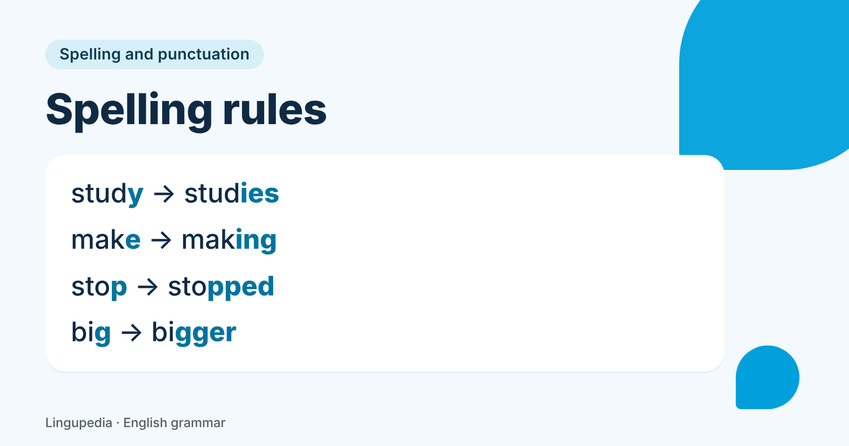
When we add an ending to a word, the spelling sometimes changes. These rules help you.
1. Consonant + y → i
| Word | + ending |
| study | studies, studied, but studying |
| happy | happier, happiest, happily |
| city | cities |
Vowel + y does not change: play → plays, played.
2. Drop the silent -e
| Word | + ending |
| make | making |
| live | lived, living |
| nice | nicer, nicest |
But keep the e before -s: makes, nicely.
3. Double the last consonant
In short words that end in one vowel + one consonant, we double the consonant:
| Word | + ending |
| stop | stopped, stopping |
| big | bigger, biggest |
| run | running, runner |
Not with w, x or y: snowing, boxing, playing.
In longer words, we double only if the stress is on the last part: beGIN → beginning, but VISit → visiting.
4. Add -es after s, sh, ch, x, o
buses, washes, watches, fixes, goes