
 English grammar
Short answers: yes, I do and no, I don’t 📕
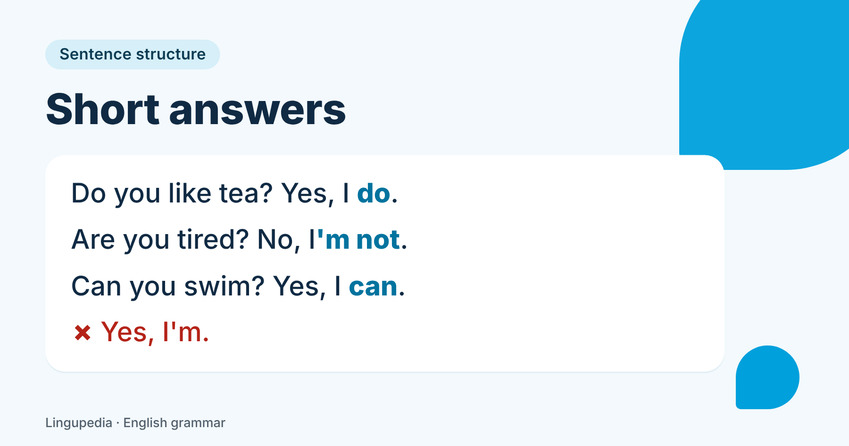
In English, we often answer a yes/no question with yes or no + subject + helping verb. Just "yes" or "no" can sound a bit short.
| Question | Yes | No |
| Do you like tea? | Yes, I do. | No, I don't. |
| Does she work here? | Yes, she does. | No, she doesn't. |
| Are you tired? | Yes, I am. | No, I'm not. |
| Can you swim? | Yes, I can. | No, I can't. |
| Did they come? | Yes, they did. | No, they didn't. |
| Have you eaten? | Yes, I have. | No, I haven't. |
Use the same helping verb as in the question
✗ Do you speak English? Yes, I speak.
✓ Do you speak English? Yes, I do.
No short form in positive answers
✓ Yes, I am.
✗ Yes, I'm.
Answering negative questions
In English, yes means the positive is true. No means the negative is true.
Don't you like coffee? Yes, I do. (I like coffee)
Don't you like coffee? No, I don't. (I don't like coffee)