
 English grammar
Must, have to and should 📕
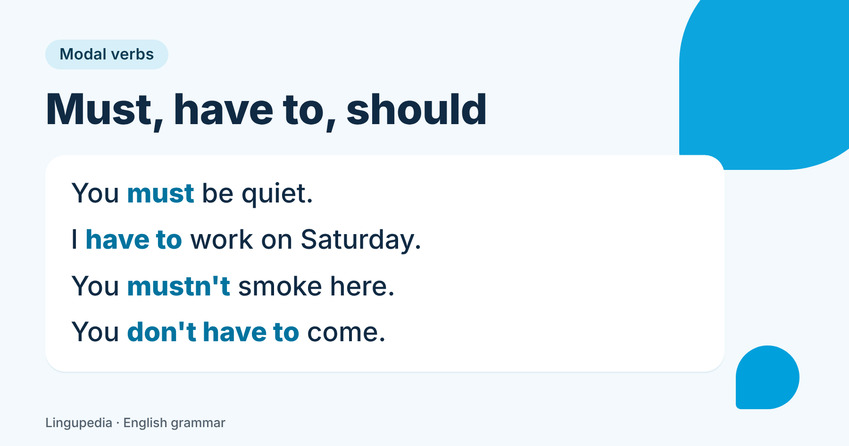
Must: strong obligation, often from the speaker
I must remember to call my mother.
You must be quiet in the library.
Have to: obligation from outside (rules, laws, work)
I have to work on Saturday.
She has to wear a uniform.
Have to works like a normal verb: does she have to, I had to, I will have to.
Past: only had to
✓ I had to wait for an hour.
✗ I musted wait.
Negative: mustn't and don't have to are very different!
| Form | Meaning | Example |
| mustn't | It is not allowed. | You mustn't smoke here. |
| don't have to | It is not necessary. | You don't have to come. It's optional. |
Should: advice
You should sleep more.
You shouldn't eat so much sugar.
What should I do?
💡 Should is softer than must. It is a recommendation, not a rule.