
 English grammar
Subordinate clauses: when, if, although, while 📕
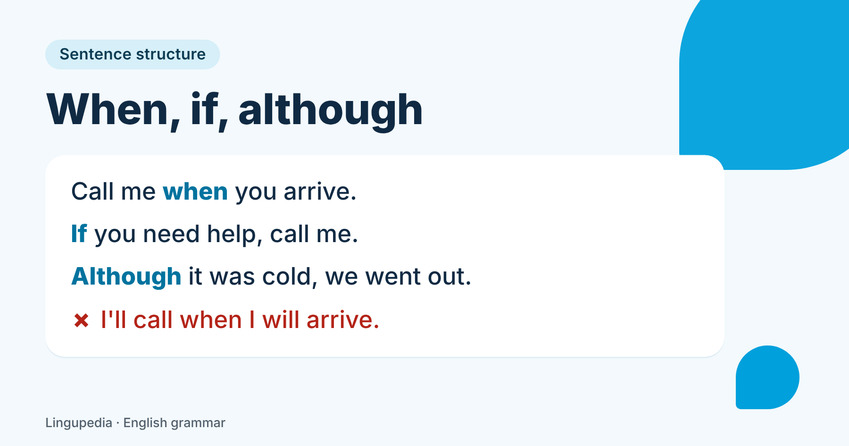
A subordinate clause is a part of a sentence that cannot stand alone. It starts with a word like when, if, because, although, while, before, after or until.
Common words
| Word | Meaning | Example |
| when | time | Call me when you arrive. |
| while | at the same time | I listen to music while I work. |
| before / after | order in time | Wash your hands before you eat. |
| until | up to a time | Wait until I come back. |
| if | condition | If it rains, we'll stay inside. |
| although | contrast | Although it was cold, we went out. |
| because | reason | She is happy because she got the job. |
Word order: the same as in a normal sentence
In English, the word order does not change in the subordinate clause, and not in the main clause after it.
✓ When I came home, I was tired.
✗ When I came home, was I tired.
Comma
When the subordinate clause comes first, use a comma. When it comes last, you usually do not need a comma.
If you need help, call me.
Call me if you need help.
Future meaning: present tense after when and if
✓ I'll call you when I arrive.
✗ I'll call you when I will arrive.