
 English grammar
First conditional: if + present, will 📕
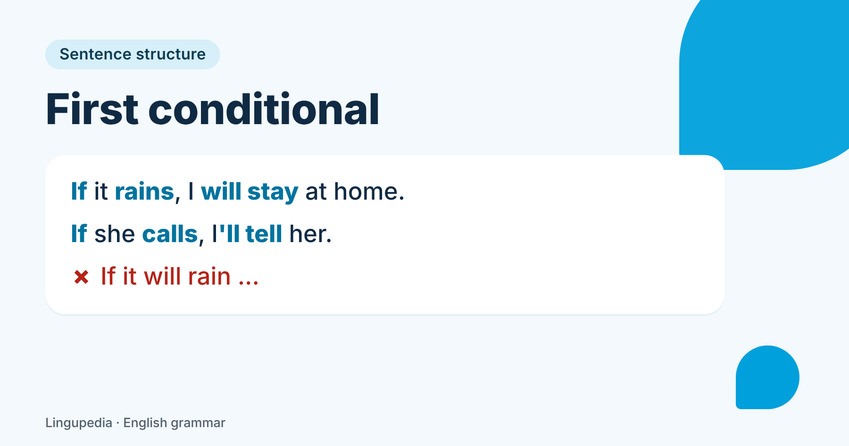
We use the first conditional for things that are possible or likely in the future.
Form
| If + present simple | will + base form |
| If it rains, | I will stay at home. |
| If you study, | you will pass the test. |
| If she calls, | I'll tell her. |
The two parts can change places. Then we do not need a comma:
I will stay at home if it rains.
Do not use will after if
✗ If it will rain, I will stay at home.
✓ If it rains, I will stay at home.
Unless = if not
I won't go unless you come with me.
I won't go if you don't come with me.
Zero conditional: facts that are always true
With general truths, use the present simple in both parts:
If you heat ice, it melts.
If I drink coffee late, I can't sleep.